

WE LOVE THIS GAME.
WE love earth, too.
GOLF IS GREAT
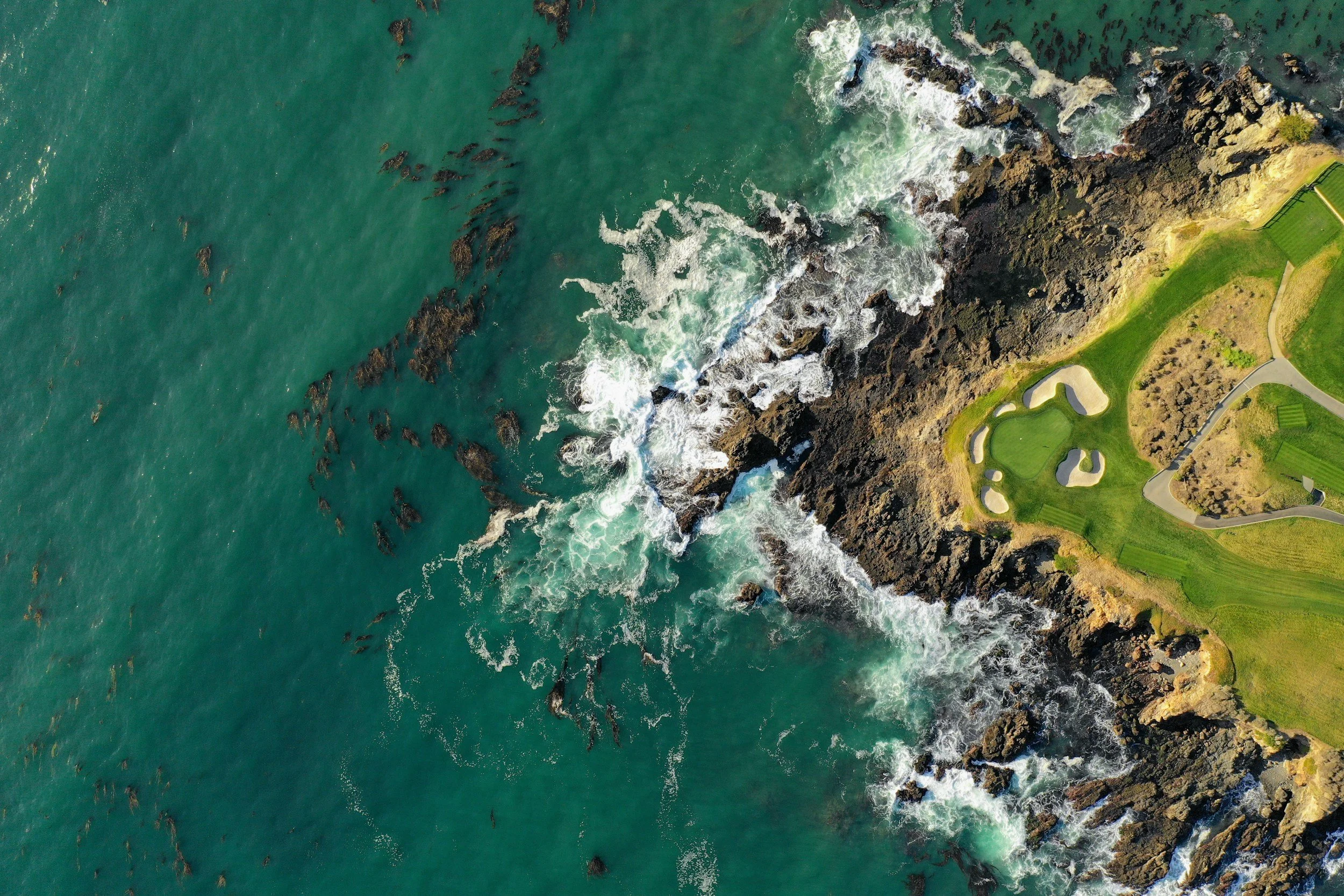
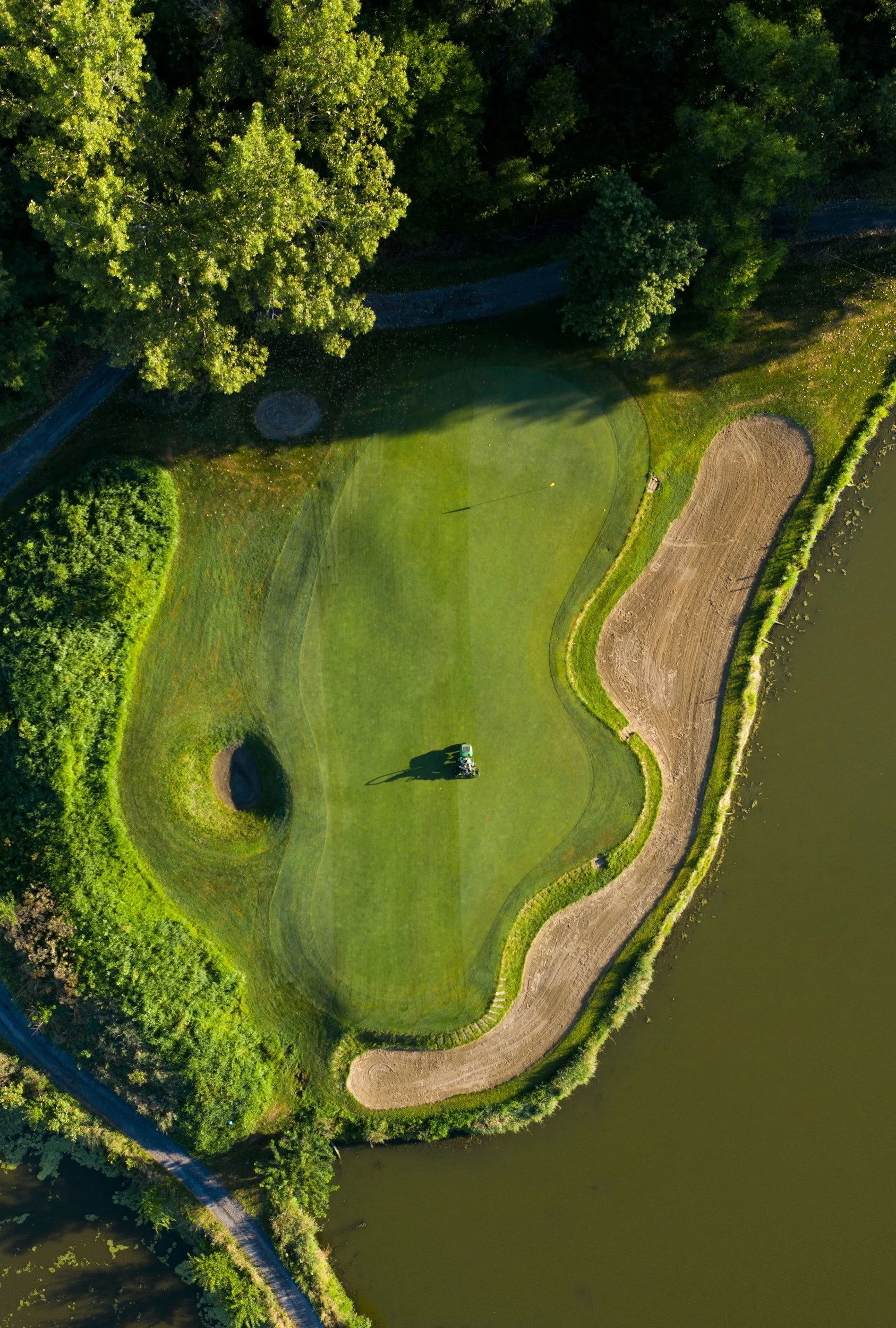
There's something wonderful about those hours on a golf course - no notifications, no deadlines, no noise, just you, your buddies, and eighteen holes standing between you and whatever you left in the parking lot. Golf demands your full attention in a way that quietly forces you to be present: reading the land, feeling the wind, making a hundred small decisions every round. Few sports carry the weight this game does - in its courses, its players, its traditions. You can stand on a tee box at a hundred-year-old club and feel the presence of everyone who came before you, on landscapes so beautiful they barely seem real. That's why we don't just play this game, we love it.
THE HARD TRUth
But the same land that makes golf so beautiful comes at a cost the sport has been slow to reckon with. Maintaining those immaculate fairways demands enormous amounts of water, chemicals, and energy - resources pulled from the very ecosystems that make courses worth playing on in the first place. Golf occupies millions of acres across the country, much of it converted from natural habitat that once supported far richer biodiversity than a fairway ever could. And yet the environmental conversation has largely happened at the margins - in academic papers and quiet policy discussions that most golfers never see. The courses keep getting watered, the chemicals keep getting applied, and the players who love the game most are often wholly unaware. But that doesn't have to be the case anymore.
THE FACTS
A typical golf course emits OVER 20 tons of CO2 A YEAR
A single round of golf generates aBOUT 15kg of CO2e per player
U.S. golf courseS CAN use UP TO 312,000 gallons of water per day
courses occupy over 2 million acres of land - larger than some states
Golf courses apply pesticides at 4–7x the agricultural rate — and residents within a mile are 2.26x more likely to develop Parkinson's disease

WHAT’s THE SOLUTION?
Thankfully, the environmental story of golf isn't entirely one-sided. Courses function as green spaces in increasingly developed landscapes - cooling surrounding neighborhoods by up to 10 degrees, managing stormwater runoff, and providing urban habitat for birds, pollinators, and native wildlife that would otherwise have nowhere to go. The industry has also made real, measurable progress, such as U.S. golf courses reducing water consumption by 31% since 2005, and a growing number are actively converting out-of-play areas back to native vegetation. Compared to a parking lot, a strip mall, or a housing development, a well-managed golf course can be a real environmental asset.
But potential isn't the same as accountability. Progress on water efficiency doesn't undo the chemical runoff still entering watersheds. Green space value doesn't offset the carbon still being emitted. And good intentions don't replace the habitats lost when the course was built in the first place. The game we love still has a debt to pay, and most of the people playing it don't even know it exists. That's where we come in. Alongside everything golf already does right, we pledge that…
10% of every sale is donated directly to organizations working to address GOLF’s LARGEST ENVIRONMENTAL FOOTPRINTS:
Offsetting CO2e emissions, protecting watersheds, preserving natural habitat, and reducing the golf industry's dependence on toxic chemicals. Every time you buy from us, you're funding that work directly - giving back to the planet rather than taking from it. Here's exactly where your money goes - and why.
Golf's environmental footprint isn't one problem, it's four.
Let’s break down why these four areas are important, which organizations we partner with, and how we decided how to split up that 10% donation between all of them.
Greenhouse gases are the most universally understood environmental problem and the most directly tied to climate change, which is why it receives the largest share of our donation and backs every rounds-offset claim we make. We offset through Cool Effect, a nonprofit that triple-verifies every project and sends over 90% of every dollar directly to the cause. It's the pillar our marketing is built on, so it's the one we fund most.
GREENHOUSE GAS Offsetting - 30%
WATER PROTECTION - 30%
Water is statistically golf's most acute environmental problem, which is why it shares the top of our split with greenhouse gases. We donate to American Rivers, one of the most respected watershed conservation organizations in the country. While greenhouse gases get the headlines, water is where golf does its most immediate damage to the world around it, and we wanted our funding to reflect that honestly.
BIODIVERSITY & HABITATS - 25%
Unlike greenhouse gases or water, habitat loss can't be reversed with a calculation. It requires active, ongoing protection of real land, which is why this pillar demands a substantial share even though it's harder to reduce to a single marketing number. We partner with [Partner TBD] to fund natural habitat protection and restoration in the ecosystems golf has displaced.
CHEMICAL POLLUTION - 15%
This pillar receives the smallest share not because it matters least, but because the most meaningful change here comes through advocacy and regulatory pressure rather than direct offsetting. We partner with [Partner TBD] to fund research and advocacy aimed at reducing the golf industry's dependence on toxic chemical inputs - work that requires focused, sustained funding to move the needle.
OUR PROMISE

We'll never ask you to take our word for any of this. Every dollar donated by Offset Golf Co. is tracked and published in monthly reports you can find in our newsletter.
We also commit to honesty about our limitations. We’re a small brand, and our early donations will be modest. We won't inflate our impact or hide behind vague language about "supporting the planet", we will be transparent about where we are, show you how the numbers grow over time, and hold ourselves to the same standard of accountability we'd expect from any organization we donate to.
Every product in our store includes the exact number of rounds it offsets and a breakdown of where every dollar of your donation goes, so the impact of your purchase is never abstract. This game gives us so much, the least we can do is give some of it back.
We're all playing on the same course, let's take care of it.
-Dylan Perrow, Founder & CEO